Paddle Boarding vs. Kayaking: Which is Harder and Why?
Picture yourself gliding across the water, the sun gleaming on the surface. You have two choices: the steady grace of a paddle board or the swift rhythm of a kayak. Choosing between paddle boarding and kayaking often comes down to personal preference, but if you're wondering which is more challenging, you're not alone! Both activities offer unique experiences and benefits. Let's explore the intricacies of paddle boarding and kayaking to see which might suit your adventure needs.
🏄♂️ Understanding Paddle Boarding
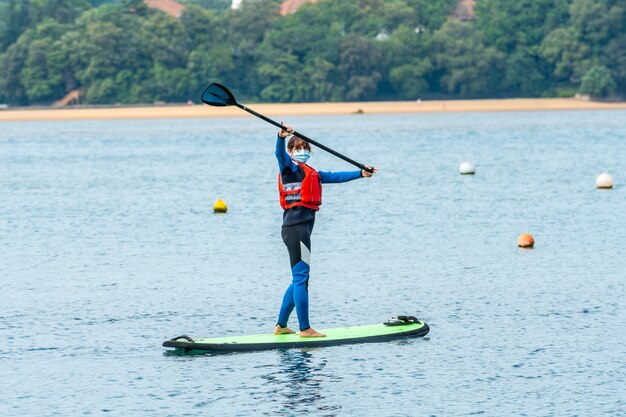
Paddle boarding, or stand-up paddleboarding (SUP), involves standing on a board similar to a surfboard and using a long paddle to maneuver through the water. The sport's simplicity and minimal equipment requirements make it an attractive option for those just stepping into water sports.
Skills Needed for Paddle Boarding
- Balance: Standing upright on an unstable surface demands good balance. While initial attempts may feel wobbly, with practice, most people find their sea legs relatively quickly.
- Core Strength: Paddle boarding heavily engages your core muscles, providing a full-body workout while promoting stability and coordination.
- Endurance: Sustained paddling requires muscular endurance, particularly in the arms and shoulders, as you maintain propulsion over long distances.
Common Challenges
- Weather Conditions: Wind and waves can make paddle boarding more challenging, requiring additional skills and strength to navigate effectively.
- Beginner Jitters: Standing upright may initially seem daunting for beginners, leading to frequent tumbles into the water.
Benefits of Paddle Boarding
- Calming Experience: Gliding smoothly across calm water is meditative, offering psychological benefits alongside physical ones.
- Full-Body Exercise: Provides a workout for core, legs, arms, and shoulders, promoting overall fitness and health.
🚣♀️ Delving into Kayaking
Kayaking offers a different approach, where paddlers sit in a small boat and use a double-bladed paddle to move. Kayaks are versatile—their design ranges from stable recreational models to agile white-water boats.
Skills Needed for Kayaking
- Upper Body Strength: Kayaking emphasizes the arms, shoulders, and back, requiring upper body strength for effective paddling.
- Technique: Proper paddling techniques are crucial. Efficient strokes reduce fatigue and increase travel distances.
- Navigation and Safety: Understanding currents, reading water conditions, and performing self-recovery from capsizes are essential skills, especially in challenging environments.
Common Challenges
- Capsizing: Kayaks can tip over, especially in rough water, making it essential to be comfortable with water rescues and re-entry techniques.
- Physical Demand: Longer trips necessitate enduring arm and core exertion, which can be tiring for beginners.
Benefits of Kayaking
- Speed and Agility: Kayaks can achieve greater speed and maneuverability compared to paddle boards, which is beneficial for covering more water or navigating tight spaces.
- Variety of Environments: Kayaking can take you from serene lakes to roaring rivers, offering diverse experiences across different water bodies.
🤔 Comparing Difficulty: Paddle Boarding vs. Kayaking
Determining the difficulty between paddle boarding and kayaking involves breaking down each activity's demands and fit.
Learning Curve
- Paddle Boarding: Initial balance learning may present a steep curve for some, but the fundamentals come quickly with practice.
- Kayaking: Easier to get started with, focusing on paddle techniques, although mastering advanced maneuvers and safety skills takes time.
Physical Demands
- Paddle Boarding: Offers a full-body workout with an emphasis on balance and core strength.
- Kayaking: Targets upper body and back muscles, demanding sustained arm effort.
Personal Comfort
- Comfort Level: Some find standing on water difficult, while others might feel confined in a kayak.
- Water Immersion: Paddle boarding generally keeps you drier than kayaking unless capsizing occurs frequently.
Variety and Versatility
- Paddle Boarding: Offers more flexibility for on-water activities like yoga or fishing.
- Kayaking: Suitable for various conditions, including rapid rivers and coastal exploration.
🎯 Tips for Choosing Between Paddle Boarding and Kayaking
Choosing between paddle boarding and kayaking often boils down to what you're seeking from the experience and your personal goals. Here are some actionable tips:
- Assess Your Environment: Think about where you’ll be paddling—calm lakes versus ocean or rivers—as water conditions will influence the difficulty and equipment suited for your activity.
- Try Before You Buy: Renting equipment before making a purchase can provide valuable insight into which activity resonates with you.
- Consider Your Fitness Goals: If you want a full-body workout, paddle boarding might be your choice. For upper body strength and endurance, kayaking excels.
- Learn and Practice: Taking lessons can help improve your skills and confidence, whether you're enhancing your balance on a paddle board or perfecting stroke techniques in a kayak.
- Join a Community: Becoming part of a paddle board or kayak group can provide social interaction, learning opportunities, and enhance your safety with shared experiences.
📋 Quick Comparison Summary
Here's a handy bullet-list to quickly sum up the main points when deciding between paddle boarding and kayaking:
- Paddle Boarding:
- Emphasizes balance and core
- Great for calm waters and full-body exercise
- Offers diverse activities like yoga
- Kayaking:
- Focuses on upper body strength
- Suitable for various water conditions
- Faster with a more technical approach
🛶 Final Decision: Paddle Board or Kayak?
Ultimately, whether paddle boarding is harder than kayaking hinges on personal preference, physical capabilities, and environmental circumstances. For those who relish a tranquil, full-body workout, paddle boarding may be the way to go. If you seek speed and versatility across more demanding waters, kayaking could be your perfect match. By assessing your priorities, environment, and physical abilities, you'll embark on the aquatic adventure that suits you best!
Related Topics
- Are Guided Kayaking Trips In The Florida Everglades Suitable For Beginners?
- a Short Adventure Kayaking Rentals
- Can i Go Kayaking While Pregnant
- Does Kayaking Build Muscle
- Does Kayaking Have a Weight Limit
- Do You Need a Life Jacket For Kayaking
- How Can I Find Reliable Reviews For Kayaking Trip Operators?
- How Can I Improve My Paddling Efficiency For a Long-distance Kayaking Trip?
- How Do You Spell Kayaking
- How Hard Is Kayaking
- How Many Calories Does Kayaking Burn
- How Much Does Kayaking Cost
- How Much Should I Budget For a Week-long Guided Kayaking Trip?
- How Physically Demanding Is a Kayaking Trip Through The Norwegian Fjords?
- How To Dress For Kayaking
- How To Get Into Kayaking
- Is Kayaking a Good Workout
- Is Kayaking a Sport
- Is Kayaking Dangerous
- Is Kayaking Easy
- Is Kayaking Fun
- Is Kayaking Good Exercise
- Is Kayaking Hard
- Is Kayaking Safe
- Is There a Weight Limit For Kayaking